


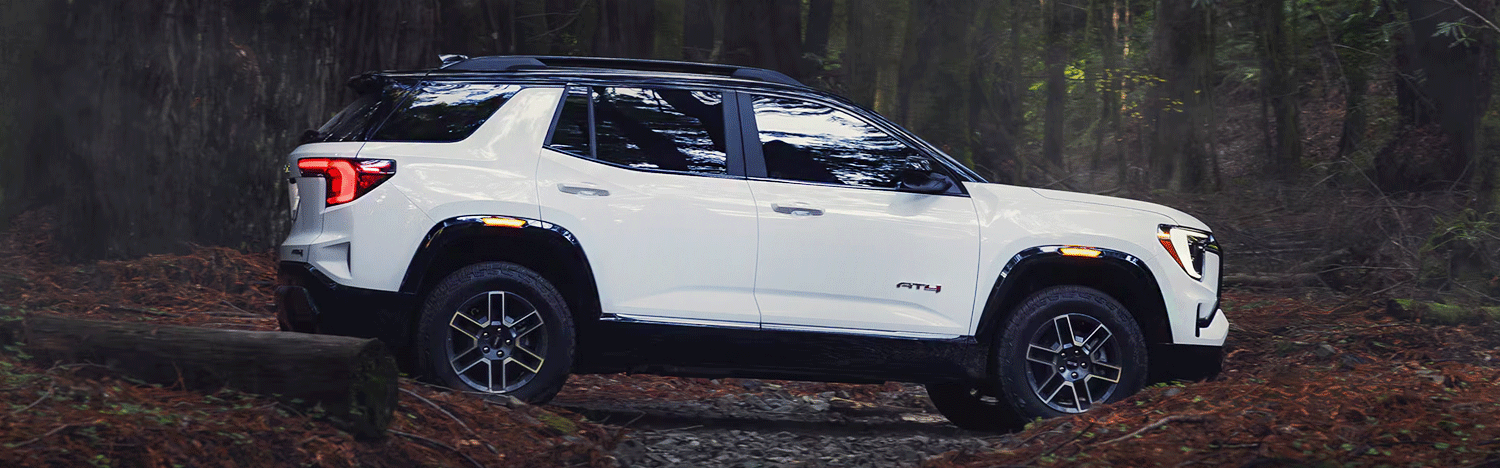
Choosing the right drive—AWD or FWD—ultimately comes down to your daily commute and how you plan to use your vehicle. Basically, FWD only powers the front wheels, but AWD has the ability to send power to all four wheels when you need that extra grip. Let's take a quick look at the core differences.
FWD vs AWD: Key Differences
-
Traction and Handling
FWD vehicles are a great fit for most drivers. They handle well in everyday conditions, even when it's raining. If you often drive in the snow or like to go off-road, an AWD vehicle will give you extra traction and stability for added peace of mind.
-
Fuel Efficiency
FWD vehicles usually get better gas mileage. AWD models tend to weigh more and have extra parts, which can lower efficiency. The good news is that most AWD systems only turn on when they sense slippery roads, so you can still get solid fuel economy most of the time.
-
Maintenance
AWD systems are a bit more complex and usually need more regular maintenance. For example, AWD vehicles have a differential that often needs its fluid changed every 30,000 to 60,000 miles, depending on the model. FWD systems are simpler and generally easier to maintain.
If you have specific questions regarding the differences between FWD and AWD, please contact Van Buick GMC for assistance.
